
Hudaibiyah Makkah Guide: History, Location, Treaty of Hudaybiyyah and How to Visit
Hudaibiyah is one of the most historically significant places near Makkah, Saudi Arabia. Also written as Hudaibiya, Hudaybiyyah, or Al-Hudaybiyah, this location witnessed an important turning point in early Islamic history: the Treaty of Hudaybiyyah between Prophet Muhammad ﷺ and the Quraysh of Makkah.
The agreement was reached in 6 AH, commonly dated to 628 CE. Although some of its conditions initially appeared difficult for the Muslims, the treaty created a period of peace that allowed relationships between communities to change and helped prepare the way for the Conquest of Makkah.
Today, the historical area is associated with Ash-Shumaysi, west of Makkah on the old road toward Jeddah. Visitors interested in Islamic history can explore the area associated with the treaty, including the historic mosque site and well.
This guide explains where Hudaibiyah is located, the events that took place there, the significance of the peace agreement, what remains today, and how travelers can plan a respectful visit from Makkah.
Where Is Hudaibiyah Located in Saudi Arabia?
Hudaibiyah is situated west of Makkah, in the Ash-Shumaysi area, along the historical approach toward Jeddah. It is associated with the boundary of the Haram, the sacred precinct surrounding Makkah.
A Saudi government historical-landmarks reference places it approximately 24 km west of Makkah. Discover Makkah describes it as approximately 20 km from the city and lists a distance of about 22 km from the Haram. These are approximate reference distances, not guaranteed driving distances from a particular hotel.
| Location detail | Information |
|---|---|
| Historical name | Al-Hudaybiyyah |
| Arabic name | الحديبية |
| Modern associated area | Ash-Shumaysi (الشميسي) |
| Region | Makkah, Saudi Arabia |
| General direction | West of Makkah toward Jeddah |
| Approximate reference distance | Around 20–24 km from central Makkah/Haram reference points |
| Historical importance | Treaty of Hudaybiyyah, 6 AH |
| Transport options | Taxi or private car |
Is Hudaibiyah inside Makkah?
Hudaibiyah is associated with the western boundary area of Makkah’s sacred precinct. Historically, its location mattered because the Muslims were prevented from entering Makkah to perform Umrah and stopped at Hudaybiyyah instead.
The precise boundary distinctions of the historical campsite are more detailed than the modern name alone suggests. A visitor should therefore distinguish the general Ash-Shumaysi historical area from any claim that a particular modern wall, tree, or structure marks an exact event location.
Is Hudaibiyah near Taif?
No. Hudaibiyah lies west of Makkah in the direction of Jeddah, while Taif lies on the other side of Makkah, toward the mountains.
Visitors hoping to explore both destinations should treat them as separate journeys or request a customized itinerary. Assuming that Hudaibiyah is on the direct route from Makkah to Taif could result in unnecessary travel.
What Happened at Hudaibiyah in 6 AH?
The events at Hudaibiyah began when Prophet Muhammad ﷺ traveled from Madinah toward Makkah with his Companions, intending to perform Umrah.
The journey took place in the sixth year after the Hijrah. Historical accounts commonly describe approximately 1,400 Muslims accompanying the Prophet ﷺ, although some narrations preserve slightly different estimates.
The Muslims were traveling for pilgrimage, but the Quraysh opposed their entry into Makkah.
Rather than forcing an entry into the city, the Prophet ﷺ took a different approach, and the group eventually stopped at Hudaibiyah. Negotiations followed, leading to an agreement that became known as Sulh al-Hudaybiyyah, or the Treaty of Hudaybiyyah.
Why did the Muslims travel to Makkah?
The journey was intended for Umrah, the lesser pilgrimage involving rites at the Kaaba.
Prophet Muhammad ﷺ had seen a vision connected with entering the Sacred Mosque. This is reflected in Surah Al-Fath, particularly verse 27, which discusses the vision and the eventual safe entry into Al-Masjid al-Haram.
For the Companions, returning to Makkah had special meaning. Many had previously migrated from their home city to Madinah and wished to worship at the Kaaba.
Why did the Quraysh prevent entry?
The relationship between the Muslims of Madinah and the Quraysh of Makkah was still marked by earlier conflicts.
Quraysh leaders resisted the possibility of the Muslims entering Makkah, even though the journey was for pilgrimage.
The resulting situation created a difficult question: how could the Muslims maintain their intention to worship while avoiding an unnecessary confrontation?
The discussions at Hudaibiyah became an example of negotiating a difficult political and religious dispute rather than allowing it to develop immediately into further conflict.
The role of Uthman ibn Affan (RA)
During the negotiations, Uthman ibn Affan (RA) was sent to communicate with the Quraysh.
Reports that he might have been killed caused serious concern among the Muslims. The circumstances surrounding these reports contributed to the pledge made by the Companions at Hudaibiyah.
Uthman (RA) was not killed, and negotiations continued.
Bay’at al-Ridwan: The Pledge at Hudaibiyah
One of the major events connected with Hudaibiyah is Bay’at al-Ridwan, also known as the Pledge of Ridwan or the Pledge of the Tree.
During a period of uncertainty, the Companions pledged their commitment to Prophet Muhammad ﷺ.
The Quran refers to this event in Surah Al-Fath, verse 18, describing Allah’s pleasure with the believers when they pledged allegiance beneath the tree.
The event has lasting importance in Islamic history because of the loyalty, commitment, and trust demonstrated by the Companions during a difficult moment.
Where was the Tree of Ridwan?
The historical pledge took place beneath a tree, but visitors today should not assume that a particular modern tree can be authenticated as the original.
The historical record establishes the importance of the pledge without establishing a surviving, reliably identifiable tree for modern visitors.
For this reason, Hudaibiyah should be appreciated as a historical landscape associated with the event, not as a location where every feature can necessarily be traced to the seventh century.
The Treaty of Hudaybiyyah: A Turning Point in Islamic History
The Treaty of Hudaybiyyah was a peace agreement between the Muslims under Prophet Muhammad ﷺ and the Quraysh of Makkah.
Suhayl ibn Amr represented the Quraysh in the negotiations. The detailed account of the discussions and their conditions is recorded in Sahih al-Bukhari, including Hadith 2731–2732.
The treaty was particularly significant because it established an agreement between two communities that had been in sustained conflict.
What were the main conditions of the Treaty of Hudaybiyyah?
The principal conditions are commonly summarized as follows.
| Treaty condition | Historical significance |
|---|---|
| Ten-year truce | The two sides agreed to stop hostilities |
| Umrah postponed | The Muslims would return without performing Umrah that year |
| Return the following year | The Muslims could visit Makkah the next year for a limited stay of three days |
| Tribal alliances | Tribes could choose to align themselves with either party |
| Movement between communities | The agreement included unequal provisions concerning certain individuals leaving one side for the other |
The movement-related condition requires particular care when summarized. Historical narrations describe wording and circumstances that are more specific than the simplified statement that every person traveling from Makkah to Madinah had to be returned.
The detailed hadith accounts should be consulted when interpreting its precise legal and historical scope.
Why did some Companions find the treaty difficult?
Some of the conditions appeared unfavorable to the Muslims, especially the requirement to return without performing Umrah.
The agreement seemed disappointing after the group had traveled so far with the intention of pilgrimage.
Nevertheless, Prophet Muhammad ﷺ accepted the terms, and their wider significance became clearer as subsequent events unfolded.
The role of Umm Salamah (RA)
After the treaty was concluded, the Companions faced the emotionally difficult reality that they would not complete their planned Umrah in Makkah that year.
Umm Salamah (RA), one of the wives of the Prophet ﷺ, advised him during this situation.
According to the historical narration, her advice helped resolve the Companions’ hesitation over completing the necessary actions before returning home.
This episode is frequently highlighted for its lessons about sound judgment, consultation, and practical leadership.
Why is the treaty considered a victory?
The agreement did not initially look like a conventional victory.
However, the truce reduced immediate hostilities and created opportunities for communication, social relationships, and the spread of Islam.
The Quran’s description of a clear victory in Surah Al-Fath is closely connected with these events.
The significance of Hudaibiyah therefore extends beyond the location where an agreement was reached. It marks a change in the political relationship between the Muslims of Madinah and Quraysh in Makkah.
Hudaibiyah and Surah Al-Fath in the Quran
Surah Al-Fath is the 48th chapter of the Quran and is strongly associated with the events surrounding the Treaty of Hudaybiyyah.
The chapter opens with the declaration:
إِنَّا فَتَحْنَا لَكَ فَتْحًا مُّبِينًا
A concise English rendering is: Allah granted the Prophet ﷺ a clear victory.
The chapter also includes references relevant to the pledge of allegiance and the promise of entering the Sacred Mosque.
Its themes help explain why the treaty is remembered for its long-term consequences rather than simply the immediate terms negotiated at Hudaibiyah.
What happened after the treaty?
The Muslims returned without completing Umrah that year.
In the following year, they were able to perform the pilgrimage in accordance with the agreement.
Later, conflict involving Banu Bakr and Banu Khuza’ah, along with Quraysh involvement, led to the breakdown of the treaty.
The subsequent events culminated in the Conquest of Makkah in 8 AH, approximately two years after the agreement.
The connection between the peace of Hudaibiyah and the later Conquest of Makkah is an important part of understanding the Prophet’s ﷺ life and the development of the early Muslim community.
Historical Places to See at Hudaibiyah Today
The Hudaibiyah area is primarily an educational and historical destination. Visitors should not expect a large archaeological park or a modern tourist complex with extensive exhibitions.
Instead, the principal interest lies in understanding the historical setting and identifying the landmarks that preserve the memory of the treaty.
1. Masjid al-Hudaybiyyah
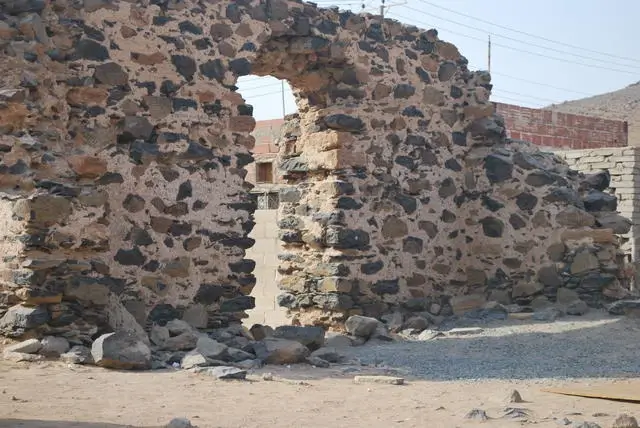
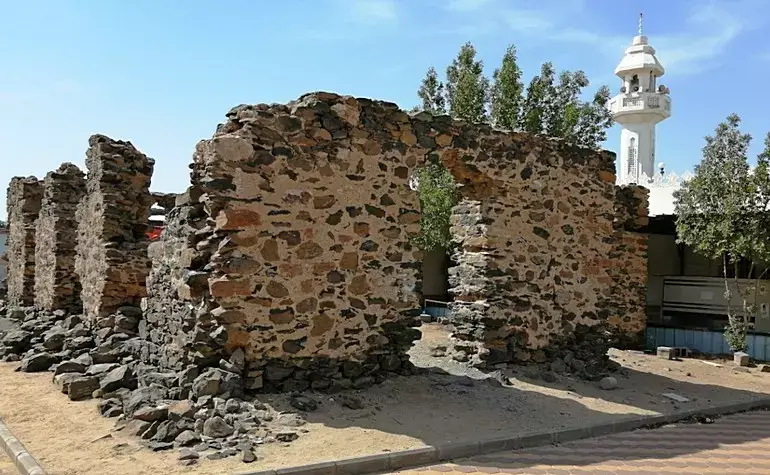
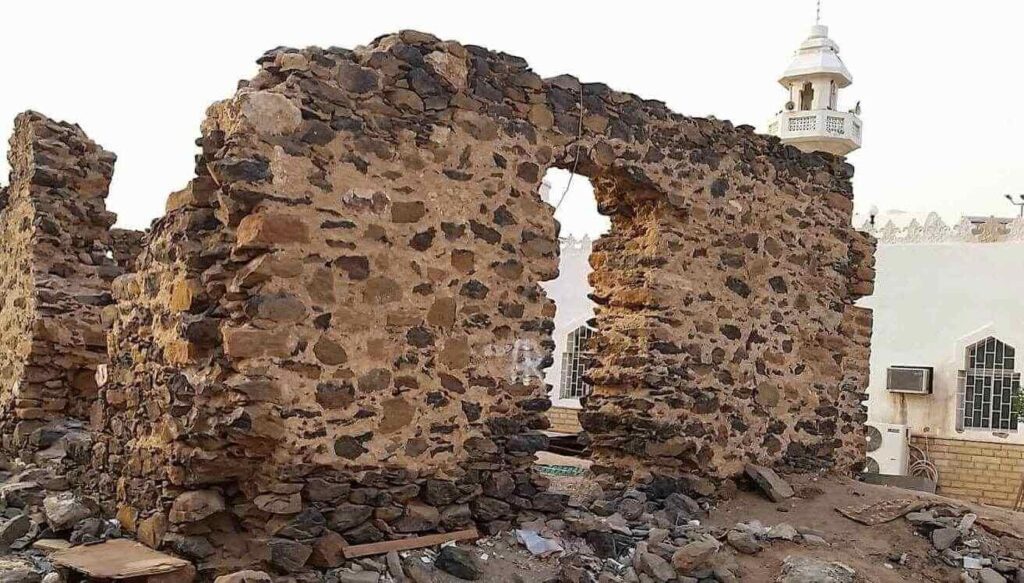
The mosque site is one of the best-known landmarks in the area. Historical remains are associated with the older mosque, while a more recent mosque serves the surrounding community. Visitors can appreciate the historical setting without assuming the current buildings date directly to the treaty.
2. The Historic Hudaibiyah Well
A historic well is identified near the mosque area. Discover Makkah describes it as approximately 450 metres southeast of Al-Shumaisi Mosque. The well is an important part of local heritage, although specific identifications with individual events should be understood in light of the historical evidence.
3. The Surrounding Historical Landscape
The surrounding landscape provides geographical context for the events of 6 AH. The relationship between Makkah, the western approach from Jeddah, and the Haram boundary helps visitors understand why Hudaibiyah became an important meeting place.
The site descriptions are supported by Discover Makkah and Saudi historical-landmarks resources. Access to particular remains may vary, and visitors should respect barriers or conservation restrictions. Al-Hudaybiyah+2
Is the original mosque still standing?
Historical mosque remains are associated with Hudaibiyah, but it would be inaccurate to describe all present-day structures as buildings from the Prophet’s ﷺ lifetime.
The site has undergone changes over the centuries. Visitors may see older masonry or ruins alongside more recent religious buildings.
Their historical significance should not be confused with a verified construction date.
Can visitors see the original treaty location?
Visitors can reach the general historical area, but identifying the exact position of every event is more difficult.
The treaty, pledge, negotiations, and other incidents occurred within a historical landscape that has changed considerably.
No visitor should expect a particular modern marker to establish beyond doubt the exact spot where the treaty document was written.
For many travelers, understanding the events and the broader setting is more valuable than searching for an unverified individual landmark.
How to Visit Hudaibiyah from Makkah
Hudaibiyah can be visited as a separate historical excursion from Makkah.
Discover Makkah lists taxis and private cars as ways to reach the site and identifies the landmark as available for visiting. The official destination information also recommends comfortable clothing, suitable footwear, water, and avoiding the hottest hours.
Visitors staying near Masjid al-Haram can begin by identifying the exact location of their hotel or agreed pickup point.
The journey then continues westward toward the Ash-Shumaysi area.
How far is Hudaibiyah from Masjid al-Haram?
The historical site is commonly described as being around 20–24 km from central Makkah or the Haram, depending on the source’s reference point.
The actual road journey may differ because vehicles must follow the available road network.
Travel time depends on several factors, including the pickup address, traffic, road conditions, and route selected.
A visitor staying near the Haram may also need extra time to reach a vehicle pickup area, especially where road access is restricted.
What transportation options are available?
| Transport option | Suitable for | Main consideration |
|---|---|---|
| Private taxi | Visitors who prefer direct transportation | Confirm fare, destination and return arrangements |
| Private car with driver | Families or groups planning a flexible visit | Confirm waiting time and itinerary |
| Self-drive car | Visitors familiar with local roads | Navigation, parking and road restrictions |
| Organized historical excursion | Visitors seeking a planned experience | Confirm which locations are actually included |
For people unfamiliar with the Makkah road network, a private driver can simplify the journey by allowing them to concentrate on the historical visit rather than navigation.
However, before confirming a journey, travelers should verify whether their chosen transportation provider serves Hudaibiyah specifically.
What is the best time of day to visit?
Early morning and the period before sunset are generally preferable because visitors may encounter exposed outdoor areas.
The weather in Makkah can be very hot, particularly during warmer months.
Morning visits may be especially convenient for families traveling with children or older relatives, as visitors can avoid spending unnecessary time outdoors during intense midday heat.
A late-afternoon visit may also be pleasant, but the return journey should be planned with available daylight, site access conditions, and traffic in mind.
How long should visitors spend at Hudaibiyah?
A short historical visit may be sufficient for someone who wants to see the mosque surroundings, identify the well area if accessible, and reflect on the events of the treaty.
Visitors seeking more detailed exploration, photography, or time for historical reading may prefer a longer stop.
There is no fixed duration suitable for everyone. It depends on which areas are accessible and the purpose of the visit.
It is usually better to plan a realistic amount of time than to combine too many historical destinations into a rushed schedule.
Planning a Hudaibiyah Ziyarat Visit
The word Ziyarat commonly refers to visiting a place of religious or historical interest.
For many pilgrims, the purpose of visiting Hudaibiyah is to learn more about the Seerah, the life of Prophet Muhammad ﷺ, and understand the circumstances of the agreement with Quraysh.
Although the site is historically important, visiting Hudaibiyah is not a required rite of Hajj or Umrah.
Travelers should distinguish educational historical visits from prescribed acts of worship.
A respectful visit can involve learning about the events, observing the landmarks, and reflecting on the lessons of the treaty.
A practical Hudaibiyah visit plan
- Before departure — Review the historyRead a reliable account of the Treaty of Hudaybiyyah and identify the historical landmarks you wish to see.
- Leave from your Makkah accommodationArrange a suitable vehicle and confirm the pickup point, especially if staying within a restricted traffic zone near Masjid al-Haram.
- Travel west toward Ash-ShumaysiFollow the appropriate road route to the Hudaibiyah historical area.
- Visit the accessible landmarksExplore the mosque surroundings and other publicly accessible historical features while respecting barriers, mosque users, and heritage protections.
- Return to MakkahComplete the visit and return to your hotel or other agreed destination.
This is a suggested sequence rather than a scheduled commercial tour. Individual stops and access should be checked before departure.
What should families bring?
For families, the main considerations are sun exposure, comfort, transport arrangements, and the limited facilities that may be available around historical sites.
Useful preparations include drinking water, comfortable shoes, sun protection, and a charged phone.
Visitors traveling with small children may wish to keep the excursion simple rather than planning multiple long outdoor stops.
For elderly relatives, choosing a suitable pickup location and minimizing unnecessary walking may make the visit easier.
Is Hudaibiyah suitable for international Umrah visitors?
Yes, international visitors who are interested in Islamic history can include Hudaibiyah in their Makkah travel plans, subject to local access arrangements.
The site’s historical significance is not limited to one nationality or language group.
Visitors who do not speak Arabic may find it helpful to review a reliable historical guide in their preferred language before traveling.
Doing so makes the physical landmarks more meaningful because the significance of the site is closely connected to the events that took place there.
How Hudaibiyah Connects to Other Islamic Historical Places in Makkah
Hudaibiyah belongs to the wider historical story of Makkah and Madinah.
Its importance becomes clearer when studied alongside other places connected with the Prophet’s ﷺ life.
For example, Masjid al-Haram is central to understanding the purpose of the attempted Umrah in 6 AH. The pilgrimage journey was directed toward the Kaaba, but the Muslims were prevented from entering the city that year.
Other historical places in Makkah help visitors understand different periods of the Seerah, from the beginning of revelation to the migration and the later development of the Muslim community.
However, these locations are geographically separate, and not every one can be conveniently included in a single outing.
Hudaibiyah and Masjid al-Haram
The connection is direct: the original journey that led to the treaty was an attempt to perform Umrah.
For present-day visitors, understanding this connection helps explain why a relatively modest site west of the city holds such importance.
Hudaibiyah and the Conquest of Makkah
The Conquest of Makkah occurred approximately two years after the Treaty of Hudaybiyyah.
The political changes that followed the treaty, along with its eventual breakdown, form part of the historical background to the conquest.
Understanding this sequence helps readers see the treaty as an event with major consequences rather than as an isolated negotiation.
Hudaibiyah and the Haram boundary
The Hudaibiyah area is historically linked with the boundary of the Haram.
Visitors should be aware that the Haram’s sacred boundaries are not identical to the modern municipal boundaries of Makkah.
Travelers should not assume that every historical landmark has the same religious rulings regarding ihram, pilgrimage, or other acts of worship.
For religious questions, official Saudi authorities and qualified scholars are more appropriate sources than a transportation website.
Important Lessons from the Treaty of Hudaybiyyah
The treaty is studied for its religious and historical importance, but it also offers lessons that remain relevant to understanding leadership, diplomacy, and conflict resolution.
Patience in difficult circumstances
The Muslims had traveled to perform Umrah and were unable to complete their intended visit.
Accepting that outcome required patience and confidence despite disappointment.
The subsequent development of events illustrates why immediate setbacks do not always represent lasting failure.
The importance of peace and negotiation
Rather than viewing confrontation as the only possible response, the treaty demonstrates the importance of negotiation.
A temporary compromise created circumstances that contributed to longer-term change.
The historical context matters: the agreement was not simply a general statement about peace but a specific political settlement involving difficult and unequal conditions.
Respecting agreements
The importance of honoring commitments is another prominent theme.
The eventual breakdown of the treaty, following developments involving allied tribes, shows how violations of an agreement can have serious consequences.
Consultation and leadership
The role of Umm Salamah (RA) illustrates the practical importance of seeking and acting upon wise advice.
Her contribution is remembered alongside the wider events because it helped the Muslims navigate a difficult moment after the agreement.
Understanding long-term outcomes
The treaty initially appeared unfavorable to some of the Companions.
Its later significance shows why historical decisions cannot always be judged solely by their immediate results.
Together, these lessons help explain why Hudaibiyah remains an important subject in Islamic education.
Private Taxi Services for Makkah Visitors and Taif Excursions
Visitors staying in Makkah may wish to combine religious travel with a separate sightseeing or historical excursion.
Private transportation can be particularly useful for families and groups who want to choose their own departure time, travel with luggage, or arrange a return journey.
Makkah to Taif Taxi provides private transportation between Makkah and Taif, including family journeys, return transfers, and Taif Ziyarat tours.
The company’s website lists hotel pickup arrangements, different vehicle options, and direct WhatsApp booking for its Makkah–Taif services.
Can you book a Hudaibiyah visit through Makkah to Taif Taxi?
Travelers can contact the business to ask whether a separate Hudaibiyah transfer or customized Makkah-area visit can be arranged.
Hudaibiyah is not a standard stop on the direct Makkah–Taif route, and the availability of a dedicated Hudaibiyah trip should be confirmed rather than assumed.
Before booking, provide your Makkah pickup location, travel date, number of passengers, and desired return arrangements.
For a Hudaibiyah request, it is also helpful to specify that the destination is Ash-Shumaysi, west of Makkah, to avoid confusion with places in Taif.
Explore Taif on a separate private Ziyarat tour
Travelers who have already explored Makkah’s historical sites may also want to visit Taif, a mountain city with a distinct landscape and its own connections to Islamic history.
Popular areas around Taif include Al Hada and Al Shafa, where visitors can experience mountain scenery and viewpoints.
Other places often included in Taif historical itineraries are Masjid Addas and Masjid Abdullah ibn Abbas, depending on the planned route and accessibility.
Makkah to Taif Taxi offers private journeys from Makkah to Taif and advertises arrangements for Ziyarat and sightseeing tours. The business lists vehicle options for different group requirements on its website.
A private excursion may be appropriate for travelers who prefer a dedicated vehicle and want to agree on their stops and return arrangements in advance.
Planning an additional mountain or sightseeing excursion
Visitors interested in a more scenic experience can ask about private Taif excursions that include mountain areas such as Al Hada or Al Shafa.
These trips are different from a Hudaibiyah historical visit.
Taif itineraries involve intercity travel and mountain roads, so travelers should consider the available time, weather, and overall comfort of everyone in their group.
A combination of historical sightseeing and mountain viewpoints can make a separate Taif day trip worthwhile, provided the itinerary is realistic.
Request private transportation
Website: makkahtotaiftaxi.com
WhatsApp: +966 57 4915 372
Travelers can inquire about Makkah–Taif transfers, Taif Ziyarat, family travel, and whether an additional Hudaibiyah excursion can be arranged. Contact on WhatsApp
Prices, availability, routes, and waiting arrangements should be confirmed directly with the service before travel.
Frequently Asked Questions About Hudaibiyah Makkah
1. What is Hudaibiyah in Islam?
Hudaibiyah is the historical location near Makkah where Prophet Muhammad ﷺ and the Quraysh concluded the Treaty of Hudaybiyyah in 6 AH. It is also associated with the Pledge of Ridwan.
2. Where is Hudaibiyah today?
The historical site is associated with Ash-Shumaysi, west of Makkah toward Jeddah, Saudi Arabia.
3. How far is Hudaibiyah from the Kaaba?
Sources place the historical area approximately 20–24 km from central Makkah or Masjid al-Haram reference points. Actual road distance depends on the starting address and route.
4. In which year was the Treaty of Hudaybiyyah signed?
The treaty was concluded in Dhu al-Qa’dah, 6 AH, commonly corresponding to 628 CE.
5. Who signed the Treaty of Hudaybiyyah?
The agreement was concluded between Prophet Muhammad ﷺ, representing the Muslims, and representatives of the Quraysh. Suhayl ibn Amr was the principal Quraysh negotiator.
6. What is another name for Hudaibiyah?
It is also spelled Hudaibiya, Hudaybiyyah, and Al-Hudaybiyah. The historical agreement is commonly called Sulh al-Hudaybiyyah.
7. Why is the Treaty of Hudaybiyyah called a victory?
Although some terms were initially difficult for the Muslims, the agreement reduced hostilities and created conditions that contributed to the subsequent development of the Muslim community. Surah Al-Fath is associated with the event.
8. What is Bay’at al-Ridwan?
Bay’at al-Ridwan was the pledge made by the Companions to Prophet Muhammad ﷺ during the events at Hudaibiyah. It is mentioned in Surah Al-Fath, verse 18.
9. Can tourists visit Hudaibiyah?
Yes. Discover Makkah identifies the site as available for visiting. Access to particular historical features may vary.
10. Is visiting Hudaibiyah compulsory during Umrah?
No. Visiting Hudaibiyah is not a required rite of Umrah or Hajj. It is primarily a historical and educational visit.
11. Is the Tree of Ridwan still there?
There is no reliably authenticated surviving tree that visitors can identify as the original Tree of Ridwan.
12. What can visitors see at Hudaibiyah?
Visitors may see the mosque area, historical ruins, and the well associated with the location, subject to access and preservation arrangements.
13. Can I travel to Hudaibiyah by taxi?
Yes. Taxis and private cars are listed among the available transportation options for reaching the area. Confirm the exact destination before departure.
14. Is Hudaibiyah on the way from Makkah to Taif?
No. Hudaibiyah is west of Makkah toward Jeddah, whereas Taif lies in the opposite general direction. It should be planned as a separate excursion or part of a deliberately customized route.
15. Can I arrange a Taif tour after visiting Hudaibiyah?
Yes, but it is usually more practical to plan Taif as a separate excursion because of the different locations and travel requirements.
Makkah to Taif Taxi can be contacted on WhatsApp at +966 57 4915 372 for information about its private Taif transfers and sightseeing arrangements.
Conclusion
Hudaibiyah is far more than a historical name found in books about early Islam. It represents an important moment when patience, negotiation, commitment, and long-term judgment shaped the course of Islamic history.
The Treaty of Hudaybiyyah, concluded in 6 AH, created a period of peace between the Muslims and the Quraysh that had consequences extending well beyond the original agreement. Its connection with Bay’at al-Ridwan, Surah Al-Fath, and the later Conquest of Makkah makes it one of the most meaningful locations associated with the Seerah.
For modern visitors, Hudaibiyah offers an opportunity to understand these events within their geographical setting. The historic area of Ash-Shumaysi, west of Makkah, preserves landmarks connected with this important chapter of Islamic history.
A well-planned visit should emphasize reliable historical knowledge, respectful behavior, realistic travel arrangements, and an appreciation of the site’s religious and historical significance.
Travelers who also wish to explore Taif can arrange a separate private excursion through Makkah to Taif Taxi and inquire about vehicle options, pickup arrangements, and customized sightseeing plans.
Whether studying Hudaibiyah from home or visiting the historical area in person, understanding the events that took place there provides a deeper appreciation of one of the defining turning points in early Islamic history.