Makkah to Taif Taxi via Al Hada Mountain vs. As-Sail Al Kabir: Which Route Should You Take?
There are two main roads between Makkah and Taif: the Al Hada Mountain Road (also called Aqabat al-Kurr, part of Highway M80/Route 15), which climbs the escarpment in a series of dramatic switchbacks, and the As-Sail Al Kabir Road, a longer, flatter bypass route that runs through the town of As-Sail Al Kabir.
Al Hada is the shorter, more scenic option and is the one most private taxis use by default. As-Sail Al Kabir becomes the practical choice when Al Hada is closed for fog, rain, rockfall risk, or scheduled maintenance, or when a traveler needs to bypass Makkah’s city center entirely. A private driver familiar with both roads can choose the right one on the day, rather than leaving a traveler stuck at a closed checkpoint.
Why There Are Two Routes Between Makkah and Taif
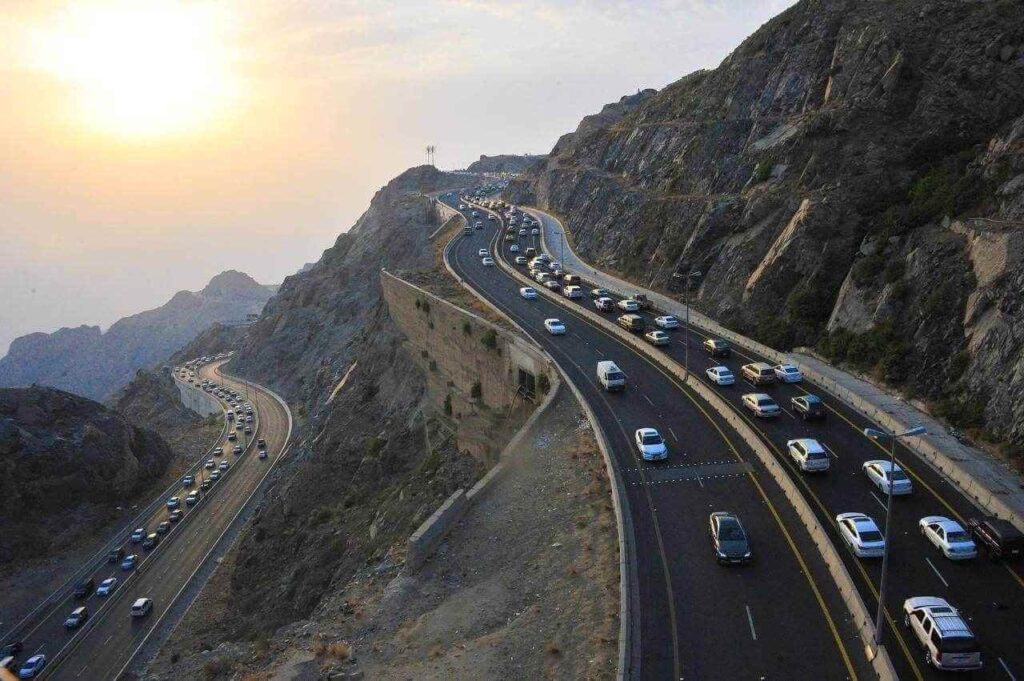
Taif sits on top of a mountain escarpment roughly 1,700–2,000 meters above the coastal plain where Makkah is located. Because of that elevation change, engineers built two very different types of road to connect the two cities:
- Al Hada Road cuts directly up the escarpment through Al Hada Mountain. It’s the historic route – the mountain crossing has been used for travel between Makkah and Taif for over a thousand years, originally as a stone-paved camel path, with the modern paved road dating back to a 1955 project.
- As-Sail Al Kabir Road takes a different alignment through the surrounding lowlands and the town of As-Sail Al Kabir, avoiding the steepest sections of the climb.
Both roads are official, maintained routes. Neither is a “shortcut” or an unofficial detour — they’re simply engineered for different priorities: Al Hada for directness and scenery, As-Sail Al Kabir for reliability and heavier traffic.
The Al Hada Mountain Route: What to Expect
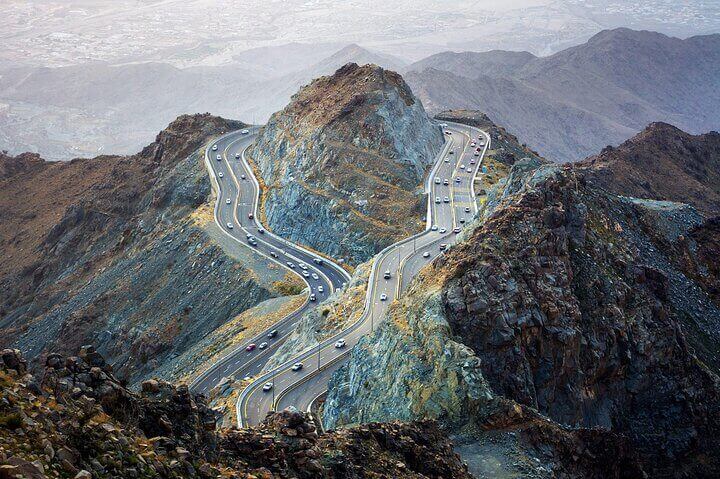
Al Hada Road (Aqabat al-Kurr) is the road most people picture when they think of driving from Makkah to Taif. It’s a winding mountain highway with sweeping curves, roadside viewpoints, and access to attractions like the Al Hada Cable Car and Al Kar Tourist Village along the way.
Key characteristics:
- Elevation: The road climbs to roughly 2,177 meters at Al Hada Mountain.
- Scenery: Genuinely dramatic — this is the route most travelers remember.
- Vehicle restrictions: Al-Hada Road is the only route in Makkah Province where trucks and large buses are banned year-round, which keeps traffic lighter for standard passenger vehicles.
- Weather sensitivity: This is the route’s main drawback. Al-Hada Road is one of the roads most frequently subject to temporary closures in the Kingdom, particularly when fog forms or during rainy weather, which can sometimes trigger rockfall. Authorities have closed it for as long as several hours during a single storm, and it has also seen full multi-day closures for planned maintenance.
- Driving conditions: Sharp curves, occasional debris after rain, and reduced visibility in fog mean this road demands a driver who is comfortable with mountain driving.
For travelers who want the classic Makkah–Taif drive and are traveling in normal weather, Al Hada is usually the more enjoyable and direct option.
The As-Sail Al Kabir Route: What to Expect
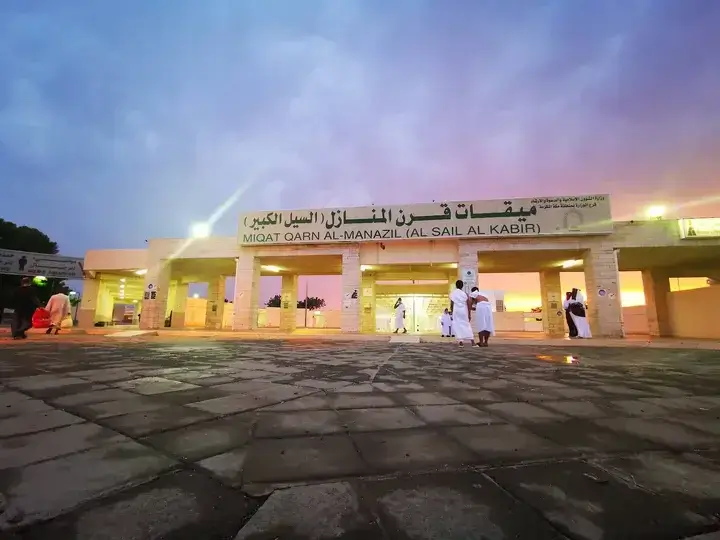
As-Sail Al Kabir Road runs through the village of the same name and connects to Taif from a different direction than Al Hada. It’s the road authorities point drivers toward whenever Al Hada is unavailable.
Key characteristics:
- Reliability: It is far less exposed to fog and rockfall than the mountain pass, so it stays open in conditions that would close Al Hada.
- Length and terrain: It’s a longer, gentler route rather than a direct mountain climb, which generally means a longer drive than Al Hada in good conditions — though it can end up faster overall on a day when Al Hada is closed or backed up.
- Official alternate status: When the Roads General Authority closed Al Hada Road for two months of maintenance starting January 2025, it specifically advised road users to take alternative routes such as the Al-Sail Al-Kabeer Road to keep their travel uninterrupted.
- Use by non-Muslim travelers: Because Makkah’s central areas are restricted to Muslims, travelers who are not permitted to enter the city center typically use a bypass (signed as Route 298) to connect toward Taif rather than routing through Makkah itself, joining the mountain road corridor near Taif from the outside.
- Heavier vehicles: Since large buses and trucks can’t use Al Hada, As-Sail Al Kabir also carries more of that heavier traffic.
Al Hada vs. As-Sail Al Kabir: Side-by-Side Comparison
| Factor | Al Hada Mountain Road | As-Sail Al Kabir Road |
|---|---|---|
| Typical use case | Default route in clear weather | Alternative when Al Hada is closed or restricted |
| Scenery | Dramatic mountain switchbacks, viewpoints, cable car access | Flatter, less scenic |
| Weather reliability | Prone to closure in fog, rain, rockfall | More stable in bad weather |
| Vehicle restrictions | Trucks and large buses banned year-round | Carries heavier vehicle traffic |
| Best for | Travelers who want the scenic drive, clear-weather trips | Bad-weather days, maintenance closures, heavier vehicles |
Exact travel time and distance depend on the specific pickup point in Makkah, the destination in Taif, traffic, and which stretch of each road is used — treat published figures as estimates rather than fixed numbers, and confirm current conditions with your driver before departure.
When Al Hada Road Closes — and What Happens Next
Closures generally fall into two categories:
- Weather-related, short-term closures. These happen with little notice during fog or heavy rain. In one documented case, Al-Hada Road was closed as a precaution for nearly eight hours due to rain and thick fog before being reopened in both directions. During these events, electronic road signs and traffic authorities typically direct drivers to divert to As-Sail Al Kabir.
- Planned maintenance closures. These are announced in advance. The Roads General Authority has previously closed Al-Hada Road in Taif Governorate for maintenance work lasting around two months, and on other occasions closed it for shorter, multi-day maintenance windows in both directions. In both cases, As-Sail Al Kabir was the designated alternative.
For a traveler booking a fixed-schedule trip, this is exactly the kind of detail that’s easy to miss until it affects an actual journey. A private driver who checks current road status before departure — rather than assuming Al Hada is always open – removes that risk from the traveler’s plans.
Which Route Should You Choose?
There isn’t a single “better” road – it depends on your priorities and the day’s conditions:
- Choose Al Hada if: the weather is clear, you want to see the mountain scenery or stop at the cable car, and you’re not restricted from the route for other reasons.
- Choose As-Sail Al Kabir if: there’s fog or rain in the forecast, Al Hada is under maintenance, you’re traveling by bus or heavy vehicle, or you’re on a bypass route around Makkah.
- Let your driver decide if: you’d rather not track road closures yourself. This is the most common approach for travelers who just want to get from Makkah to Taif reliably.
Why a Private Taxi Handles This Decision Better Than a Rental Car
A traveler driving themselves has to check road status manually – through traffic authority announcements or electronic signage and change plans on the fly if a closure comes up mid-trip. A private driver who regularly covers the Makkah–Taif corridor already knows current conditions on both roads and can choose the appropriate one before you even leave your hotel, or reroute smoothly if conditions change.
This matters most for:
- Families and groups with a fixed arrival time in Taif, where an unexpected Al Hada closure could otherwise mean sitting at a checkpoint.
- Elderly travelers who benefit from a direct, door-to-door journey without the stress of an unplanned detour.
- Travelers unfamiliar with Saudi road signage, who may not recognize closure notices or diversion signs in time.
Travelers who prefer a private, door-to-door journey between Makkah and Taif — including private day trips to Taif for sightseeing, family visits, or Ziyarat-related travel – can contact Makkah to Taif Taxi on WhatsApp at +966 57 4915 372 to ask about hotel pickup, route preferences, current road conditions, and vehicle options before booking. If you’d like the scenic Al Hada drive with stops along the way, or a straightforward transfer via whichever route is fastest on the day, mention it when you reach out and it can be planned into the trip.
Prices can vary depending on the pickup location, destination, vehicle type, travel date, and trip requirements. Contact the service directly for a current quote.
FAQs
Is Al Hada Road always the fastest way from Makkah to Taif?
In clear weather, yes – it’s the more direct mountain route. But “fastest” can flip on a day when it’s closed or congested, in which case As-Sail Al Kabir becomes the more practical option even if it covers more distance.
Why does Al Hada Road close so often?
Its mountain elevation and steep switchbacks make it sensitive to fog, heavy rain, and occasional rockfall, which is why authorities close it as a precaution rather than risk accidents in low-visibility conditions.
Can I check whether Al Hada Road is open before I travel?
Road status is announced through Saudi traffic and roads authorities, including on-road electronic signage. If you’re booking a private taxi, ask your driver to confirm current conditions before departure rather than checking this yourself.
Is As-Sail Al Kabir Road only used when Al Hada is closed?
No. It’s also the regular route for heavy vehicles (since trucks and large buses can’t use Al Hada) and for travelers using bypass routes around Makkah’s city center.
Does the route affect the taxi fare between Makkah and Taif?
It can, since As-Sail Al Kabir is typically a longer route. Confirm the expected route and any pricing details directly with your driver or the service before the trip.