
Complete Taif Ziyarat Guide for Umrah Pilgrims: Top Historical Places to Visit
Taif, in the mountains southeast of Makkah, is where the Prophet Muhammad ﷺ traveled to preach Islam and met painful rejection before finding brief kindness from a servant named Addas. Today, pilgrims visit a handful of historical mosques connected to that journey – most notably Masjid Addas, the Abd Allah ibn al-Abbas Mosque, and the mosques of the Al-Mathnah area such as Al-Qu’a (Al-Kou) Mosque. A focused Ziyarat visit to the main sites can usually be done in a few hours, though a fuller trip with stops for Taif’s cooler mountain scenery takes closer to a full day.
Why Pilgrims Visit Taif

Taif holds one of the most difficult chapters of the Prophet Muhammad’s ﷺ life. He traveled there from Makkah to invite the tribe of Thaqif to Islam and was rejected and driven out, reportedly pelted with stones as he left the city. Wounded and exhausted, he took shelter in an orchard belonging to two men from the Quraysh, Utbah and Shaybah ibn Rabi’ah. It was there that their servant, a young Christian named Addas, brought him grapes and, through their conversation, embraced Islam — becoming, by tradition, the only convert the Prophet ﷺ gained on that visit. This episode is remembered for the Prophet’s ﷺ patience and mercy even after the harshest treatment, and it’s the reason several mosques in Taif today are named for people and moments in that story.
Because of this history — and because Taif’s mountain elevation gives it a noticeably cooler climate than Makkah — the city has become a natural side trip for pilgrims who want to see where this part of the Seerah unfolded, combined with a break from Makkah’s heat.
How Far Is Taif from Makkah?
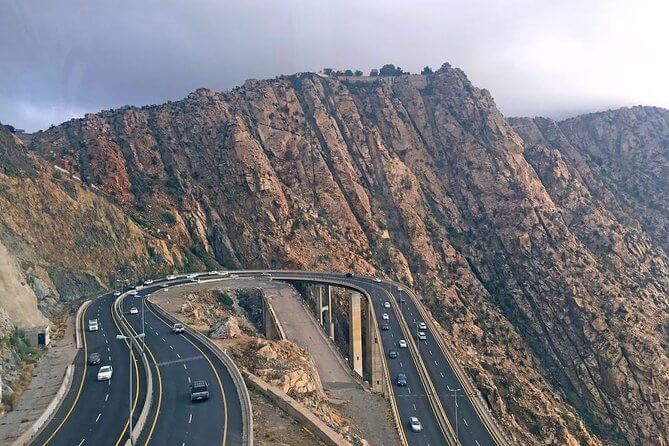
Taif sits in the Sarawat mountain range, generally described as roughly 70–90 km southeast of Makkah depending on the exact route and starting point, with the road climbing steadily through mountain terrain (the Al-Hada road is the well-known winding stretch). Actual journey time varies with traffic, weather, and road conditions, and can run from under two hours to noticeably longer during Umrah peak periods or Hajj season — so it’s worth allowing extra time rather than planning around a fixed number.
Most pilgrims don’t self-drive this route. Between the mountain roads, the spread-out location of the historical sites within Taif, and simply wanting to focus on the visit rather than navigation, arranging a private transfer for the day is the most common and least stressful approach.

The sites below are the ones most commonly included in a Taif Ziyarat itinerary. Several sit close together in Taif’s Al-Mathnah neighborhood, which makes visiting them in one trip practical.
Masjid Addas
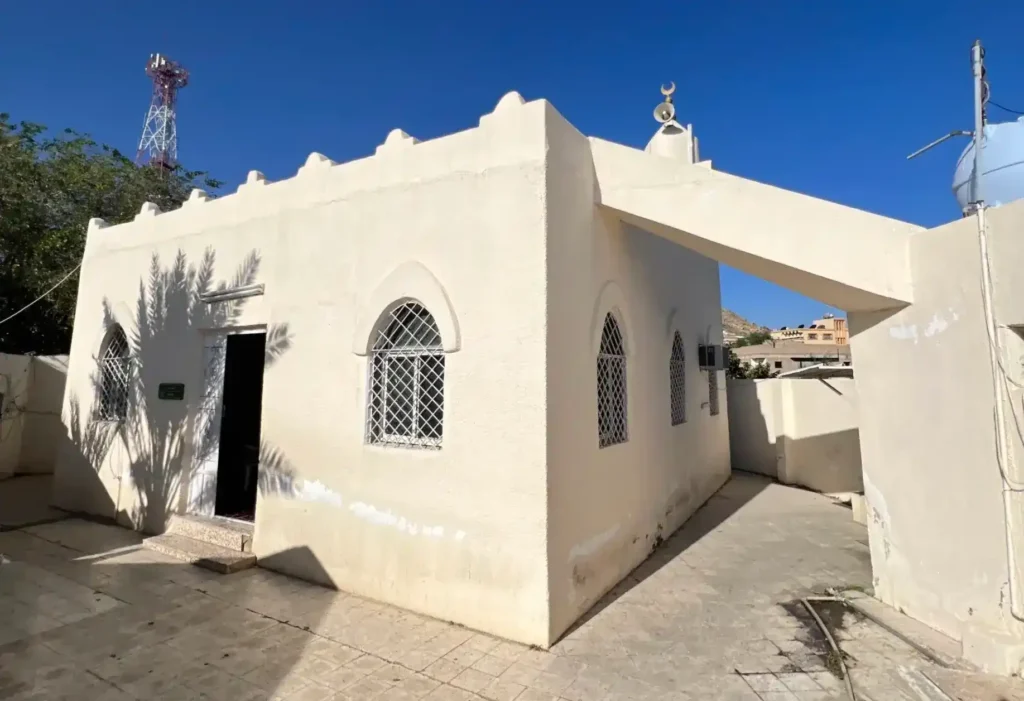
Masjid Addas is built, by tradition, on the approximate site of the orchard and the home associated with Addas, the servant who offered the Prophet ﷺ grapes and later accepted Islam. It’s a small, modest mosque rather than a grand landmark, set in a quieter part of the city surrounded by orchards. Visitors should be aware that the mosque is sometimes kept locked or is minimally signposted- local authorities have at times restricted access to sites like this specifically to prevent inappropriate devotional practices (such as treating the location itself as an object of veneration), which is not part of correct Islamic practice. If you visit, treat it as a moment of reflection on the story rather than a site with religious rites attached to it.
Abd Allah ibn al-Abbas Mosque
This mosque, located centrally in Taif, is associated with the burial place of Abdullah ibn Abbas, a cousin and close companion of the Prophet ﷺ and one of the most important early scholars of Qur’anic interpretation (tafsir). Unlike the other sites on this list, its significance isn’t tied to the Prophet’s ﷺ own journey to Taif but to a companion who is remembered as one of the great transmitters of Islamic knowledge. The current mosque structure is a later rebuilding, and it remains an active, accessible mosque today, making it one of the more straightforward stops on a Ziyarat itinerary.
Al-Qu’a (Al-Kou) Mosque
Located in the Al-Mathnah area along Wadi Waj, this mosque’s name is generally explained by local guides as referring to the Prophet’s ﷺ resting against a stone during his exhausted journey through Taif. Its current building reflects Ottoman-era construction with an older architectural style, and it sits close enough to the Al-Qantara/Al-Madhoun Mosque that the two are usually visited together.
Al-Qantara (Al-Madhoun) Mosque
Also in Al-Mathnah, this mosque is understood to stand near the orchard where the Prophet ﷺ rested after leaving Taif — the same general setting connected to the Addas story. Local tour guides date the present structure to the Ottoman period, built in a style influenced by earlier Abbasid architecture, which gives it an older appearance than its actual construction date.
A note on accuracy: dates, exact distances between sites, and some naming details for these mosques vary between local sources, and few are independently documented in detail. Where a specific historical claim isn’t firmly established, treat it as local tradition rather than settled fact, and consider asking a licensed local guide or checking with Saudi heritage authorities for anything you want to rely on more precisely.
Suggested Order and Time to Spend at Each Stop
| Stop | What It’s Connected To | Suggested Time |
|---|---|---|
| Masjid Addas | The Prophet’s ﷺ rest and Addas’s conversion | 10–15 minutes (may be closed — check before relying on entry) |
| Al-Qu’a (Al-Kou) Mosque | The Prophet’s ﷺ resting point in Taif | 10–15 minutes |
| Al-Qantara (Al-Madhoun) Mosque | The orchard where the Prophet ﷺ recovered | 10–15 minutes |
| Abd Allah ibn al-Abbas Mosque | Burial site of a leading companion and scholar | 15–20 minutes |
These are rough allowances for a respectful, unhurried visit to each site itself — they don’t include driving time between stops, which depends on where in Taif you start and how the sites are grouped on your route. A focused visit to these four sites, without additional stops, is realistic in a few hours; pilgrims who also want to see Taif’s markets, rose gardens, or mountain viewpoints typically plan for closer to a full day.
Practical Tips for a Taif Ziyarat Trip
- Best time to go: Early morning or later afternoon, when temperatures are cooler and sites are quieter.
- Dress modestly, as you would for any mosque visit, and bring comfortable walking shoes.
- Some sites may be closed or unmarked. Don’t build a tight schedule around guaranteed entry to every mosque — treat the outdoor/historical context as valuable even if a door happens to be locked that day.
- Avoid devotional practices at these sites beyond ordinary prayer and reflection. These are historical locations, not sites with special rites; treating stones, walls, or specific spots as objects of blessing is not correct practice, which is part of why access to some sites has been restricted.
- Keep the visit respectful and unhurried — photography and noise are best kept minimal, particularly at smaller, quieter mosques.
- Check current hours locally where possible, since access at individual mosques can change.
Planning Transportation for Your Taif Ziyarat Trip
Because these sites are spread across different parts of Taif rather than within walking distance of each other, most pilgrims arrange a private vehicle for the day rather than relying on public transport or trying to coordinate multiple taxis on the spot. A private transfer from Makkah allows for hotel pickup, a fixed itinerary covering the main Ziyarat stops, and flexibility to linger at a site or skip ahead if one happens to be closed.
Travelers planning a Taif Ziyarat day trip from Makkah can contact Makkah to Taif Taxi on WhatsApp at +966 57 4915 372 to discuss pickup arrangements, the route, and vehicle options for their group. Prices can vary depending on pickup location, vehicle type, travel date, and how many stops are included, so it’s best to confirm current details directly with the service rather than relying on a fixed figure.
FAQs
Is Taif worth visiting during Umrah?
For pilgrims interested in the Seerah, Taif adds meaningful historical context to the story of the Prophet’s ﷺ mission, alongside a cooler climate and scenery that’s noticeably different from Makkah. It’s an optional add-on rather than a required part of Umrah.
How far is Taif from Makkah, and how long does the drive take?
Taif is generally described as roughly 70–90 km from Makkah, with the drive typically taking under two hours in normal conditions — though mountain roads, weather, and traffic (especially during busy Umrah periods) can extend that, so it’s wise to allow extra time.
Can I visit all the Taif Ziyarat sites in one day from Makkah?
Yes, a day trip is the common approach. A focused visit to the main mosques can take a few hours; adding other Taif attractions such as mountain viewpoints or local markets makes for a fuller day trip.
Is Masjid Addas always open to visitors?
Not reliably. It’s sometimes kept closed with minimal signage, partly to discourage inappropriate devotional practices at the site. Treat a visit there as a possibility rather than a guarantee.
Do I need a guide to visit Taif’s Ziyarat sites?
It isn’t required, but a local guide or a knowledgeable driver can help with orientation, timing, and current access information, since some sites are modest and not clearly marked for visitors.
Conclusion
Taif’s Ziyarat sites won’t compare in scale to the Haramain, but for pilgrims who want to understand the fuller story of the Prophet Muhammad’s ﷺ mission, they offer a quiet, meaningful stop: the orchard where he rested, the servant who showed him kindness after rejection, and the resting place of one of Islam’s great early scholars. A well-planned half-day or full-day trip from Makkah – with realistic expectations about site access and timing — is enough to take it in respectfully. If you’re arranging the logistics, Makkah to Taif Taxi (WhatsApp: +966 57 4915 372, website: makkahtotaiftaxi.com) can help plan private, hotel-to-hotel transportation for the trip so you can focus on the visit itself rather than the driving.